Professional vs. DIY: What You Need to Know About Tennis Court Repairs
For effective tennis court repairs, it’s essential to address any surface damage promptly. Maintaining the court not only enhances playability but also extends its lifespan. Expert services can ensure proper repairs to keep the surface smooth and safe. For detailed maintenance solutions, visit www.artificialgrassmaintenance.co.uk/tennis-court-maintenance-cleaning-installation to discover how to keep your courts in top condition.
Maintaining the quality of a tennis court is essential for ensuring an enjoyable playing experience and prolonging the lifespan of the surface. Whether it’s a traditional grass court, a clay surface, or an artificial grass tennis court, understanding the importance of tennis court repairs and maintenance is crucial. In this post, we’ll explore the key differences between professional repairs and DIY approaches, helping you make informed decisions about your tennis court maintenance needs.
The Importance of Regular Maintenance
Tennis court maintenance isn’t just about aesthetics; it significantly influences playability and safety. Regular upkeep prolongs the life of your court, reduces the likelihood of costly repairs, and ensures a consistent playing surface. Typical maintenance tasks include regular cleaning, resurfacing, and repairing any damages that may arise over time. Whether you’re dealing with cracks in a hard court or the challenges posed by an artificial grass tennis court, understanding what’s required is fundamental.
Types of Tennis Court Surfaces
Tennis courts mainly fall into three categories: natural grass, clay, and hard surfaces (including artificial grass). Each requires different maintenance techniques and repair methods:
- Grass Courts: These require regular mowing, watering, and aeration. Repairing worn areas often necessitates reseeding and careful management of soil health.
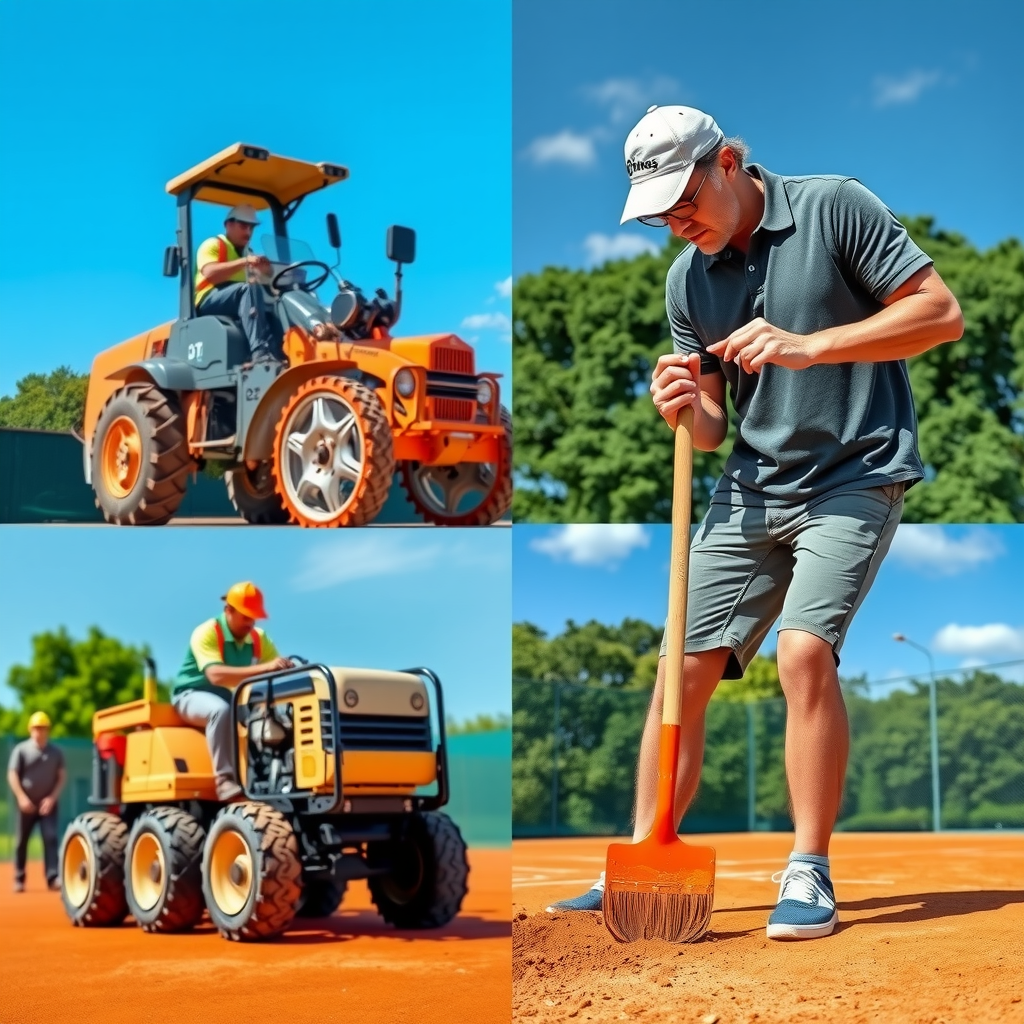
- Clay Courts: Maintenance includes rolling, brushing, and watering to prevent dust and maintain optimal playing conditions. Repairing a clay court involves replenishing the playing surface with fresh clay and re-profiling low spots.
- Hard Courts (including artificial grass): Tennis court resurfacing is crucial for hard courts. This involves repairing cracks, replacing worn-out areas, and applying a new top layer to ensure optimal performance.
DIY Repairs: Pros and Cons
While a DIY approach might seem appealing, particularly for smaller repairs, it’s vital to weigh the pros and cons.
Pros of DIY Repairs
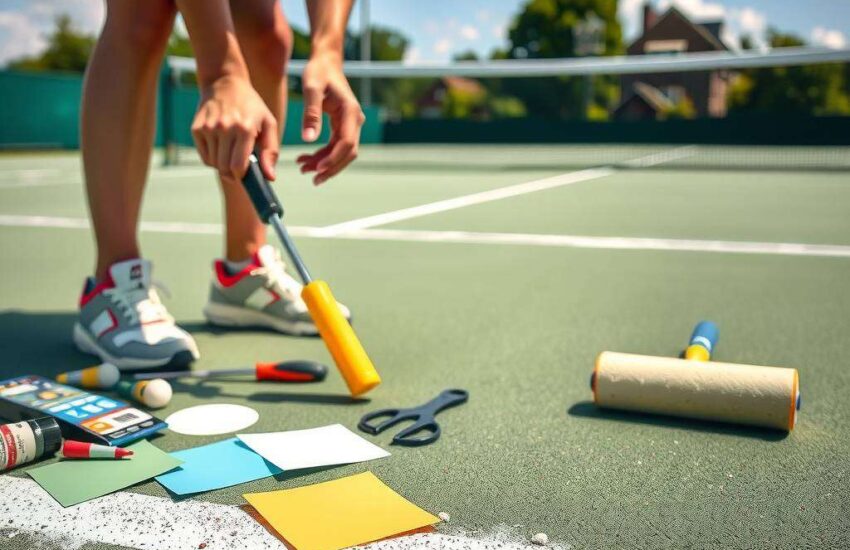
Cost Savings: DIY repairs can save significant costs on labour. With the right materials and tools, you might undertake basic maintenance tasks such as cleaning and minor repairs.
Immediate Action: If a small issue arises, you can address it quickly rather than waiting for a professional to become available. This can prevent minor issues from escalating into major problems.
Personal Satisfaction: Completing repairs on your court can provide a sense of accomplishment and ownership.
Cons of DIY Repairs
Lack of Expertise: Without professional knowledge, you risk misjudging the extent of necessary repairs. More complex issues, such as significant cracks or structural problems, may worsen if handled incorrectly.
Inadequate Tools and Materials: Professionals use specialised tools and high-quality materials that may not be readily available at your local hardware store. This can result in sub-standard repairs.
Time and Effort: While it may seem simple, specific repairs can be time-consuming. Balancing your time between DIY projects and other life commitments may not be feasible.
Professional Repairs: A Worthwhile Investment
Engaging a professional for tennis court repairs offers numerous benefits, particularly for significant maintenance jobs. Here’s what makes professional services a sound investment:
Expertise and Experience
Professional contractors possess the training and experience necessary to assess and execute repairs effectively. Their knowledge allows them to identify underlying issues that may not be visible, ensuring that the repairs are thorough and long-lasting.
Tennis court repairs are essential for maintaining optimal playing conditions. Over time, wear and tear can affect the surface, leading to potential injuries. For professional assistance, consider visiting https://www.artificialgrassmaintenance.co.uk. Their expert team specializes in restoring courts to their former glory, ensuring a safe and enjoyable experience for players of all levels.
Quality Assurance
Professionals typically use high-quality materials and professional-grade equipment that may not be accessible to homeowners. This quality assurance translates to a more durable repair and, ultimately, a better playing surface.
Comprehensive Maintenance Plans
Many professionals offer maintenance packages that include regular inspections, preventative approaches, and consultations on best practices for extending the life of your court. This can help mitigate long-term repair costs and maintain consistent playing conditions.
Safety and Compliance
Professionals are familiar with safety regulations and compliance issues related to tennis court maintenance. Engaging experts ensures that repairs meet industry standards, preventing potential liability issues for owners.
Choosing the Right Approach
When deciding between DIY and professional repairs, consider the extent of the damage, your skills and experience, and the time you can commit. Basic cleaning and maintenance tasks like removing debris or frequently checking for cracks may be suitable for the DIY approach. However, for complex repairs such as resurfacing or addressing significant structural issues, hiring a professional will yield better long-term results.
Conclusion
Whether you are a club owner, a private homeowner, or an aspiring player wishing for better playing conditions, understanding the critical facets of tennis court repairs is essential. Balancing the DIY spirit with professional expertise can ensure that your court remains a great place to play for years to come.