Top 5 Effective Methods for Tennis Court Cleaning You Should Know
Maintaining a pristine surface is vital for optimal performance in tennis, making tennis court cleaning essential. Discover effective cleaning techniques and equipment that ensure courts remain in top condition. For an in-depth look at expert cleaning methods, visit https://www.kaercher.com/us/inside-karcher/newsroom/kaercher-stories/a-dazzling-display-on-center-court.html.
Keeping your tennis court in pristine condition is essential for maintaining not just its aesthetic value but also its playability. Whether you’re managing a private court or a public facility, regular cleaning and maintenance should be a top priority. In this article, we will explore five effective methods for tennis court cleaning, focusing on varied surfaces such as artificial grass and clay courts. You’ll discover how these practices tie into broader tennis court maintenance, including repairs and resurfacing, ensuring your playing surface stays in optimum condition.
Tennis court cleaning is essential for maintaining optimal playing conditions and prolonging the lifespan of your court surface. Regular maintenance prevents the buildup of debris, moss, and algae, which can impact performance and safety. To keep your court in top shape, consider hiring professional services that specialize in tennis court cleaning. They use the right equipment and techniques to ensure a thorough clean. For expert advice and services, visit https://www.artificialgrassmaintenance.co.uk.
1. Sweeping and Brushing
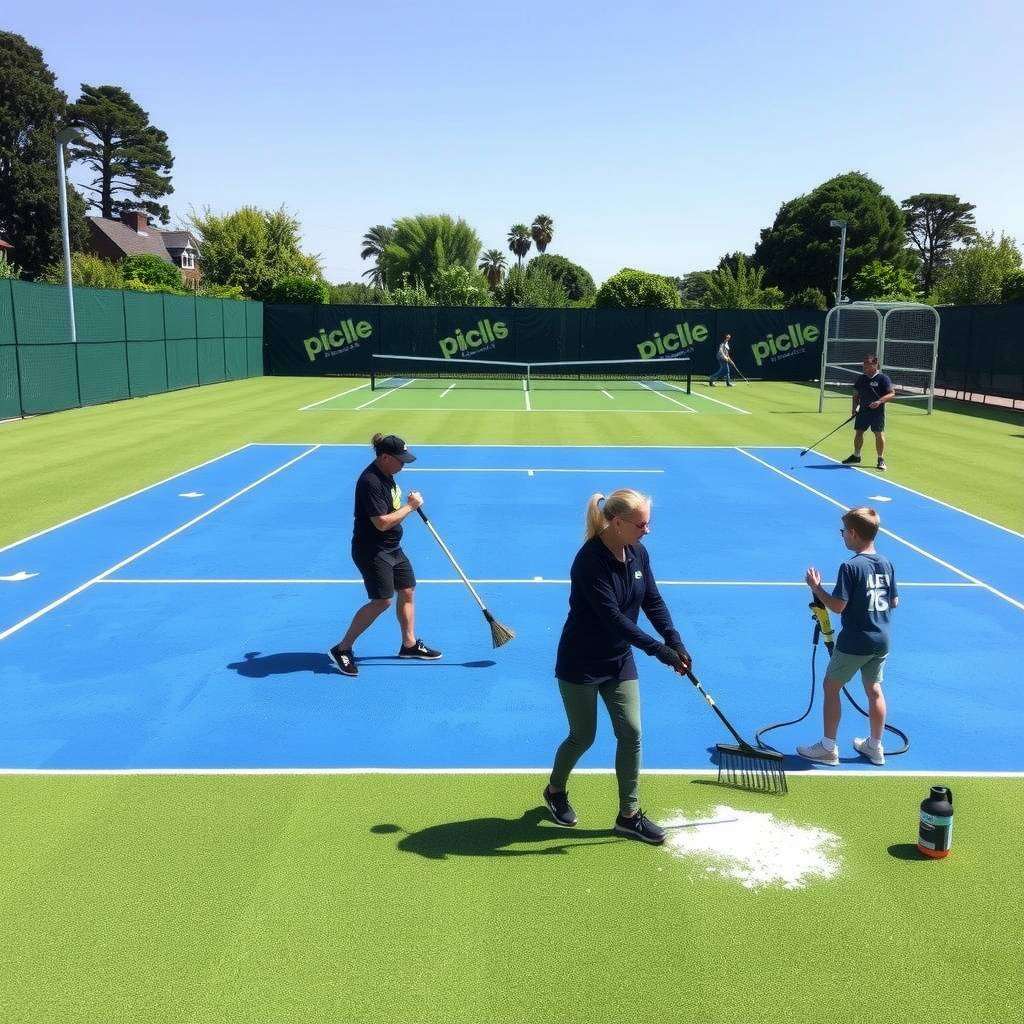
The simplest yet most effective method of cleaning any tennis court is regular sweeping and brushing. It’s essential to remove dirt, leaves, and debris promptly before they settle and become more challenging to eliminate. For clay and artificial grass courts, a specialised broom or brush is particularly useful.
Why is it important? Well, accumulated debris can lead to slippery surfaces, making play unsafe. Moreover, neglecting these small bits of dirt can cause unnecessary wear and tear, leading to more extensive tennis court repairs down the line. For artificial grass courts, using a stiff bristle brush regularly helps to keep the fibres standing upright, maintaining that fresh, even look.
2. High-Pressure Washing
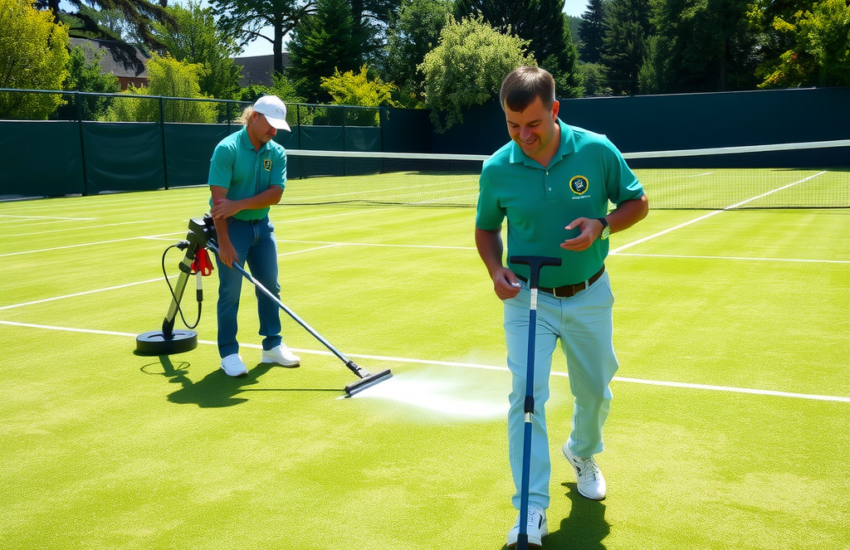
High-pressure washing is a robust method to clean hard courts, such as asphalt or concrete, and is ideal for removing stubborn stains, moss, and grime that casual sweeping might miss. When using a pressure washer, it’s essential to keep the nozzle at an appropriate distance—too close and you run the risk of damaging the surface.
If your court is made of porous materials, ensure that you allow proper time for the surface to dry thoroughly following the wash. High-pressure washing can provide a refreshing clean, especially if you’ve noticed a build-up of dirt or green algae which can be prevalent in damp conditions. Just ensure to check for any damage that might require further maintenance or even tennis court resurfacing.
3. Using Chemicals Wisely
For specific stains and the stubborn build-up of mould or mildew, sometimes a little chemical assistance is necessary. However, it’s crucial to choose the right products to avoid causing harm to the court surface. For example, using a standard cleaner on an artificial grass tennis court can result in damage to the individual blades of grass.
Always opt for eco-friendly and surface-appropriate cleaning agents. Many companies offer tailored cleaning products specifically designed for tennis surfaces, whether you have a traditional grass court or an artificial grass tennis court. Test any chemicals in a small, inconspicuous area first to ensure they don’t damage your court. And remember, caution is key, as improper use could lead to more significant maintenance issues in the future.
4. Regular Maintenance Checks
Regular maintenance checks go beyond simple cleaning. They provide an opportunity to identify any emerging issues, whether it’s cracked surfaces or worn-out areas requiring tennis court repairs. During these checks, look for any signs of water pooling, cracked lines, or signs of wear and tear. Timely repairs are crucial to extending the lifespan of your court.
For clay courts, ensure the surface remains even and well-packed, as irregularities can affect playability. On the other hand, artificial grass tennis courts should be checked for infill levels and grass fibre integrity. Keeping an eye on these elements during your cleaning routine can save you money and effort in the long run.
5. Engaging Professionals
While do-it-yourself cleaning can be effective, there are times when enlisting professional services for tennis court cleaning makes the most sense. Professionals have access to specialised equipment and knowledge of best practices. They are better equipped to handle deep cleaning tasks, such as comprehensive maintenance for artificial grass courts or resurfacing for hard courts.
Additionally, many companies that specialise in tennis court maintenance offer tailored packages that include everything from cleaning to inspections, and even resurfacing when needed. Engaging professionals not only guarantees a higher standard of cleanliness but also frees up your time to concentrate on enjoying your court.
With these five methods in your arsenal, you’ll be well on your way to maintaining a clean and safe playing environment for yourself and others. Proper tennis court cleaning, when incorporated into a broader maintenance strategy, can enhance the longevity and performance of your court, whether it’s a delightful grass court or a convenient artificial grass tennis installation. Regular attention to these aspects will ensure your court remains not just a place for competition but a beautiful asset to enjoy for years to come.